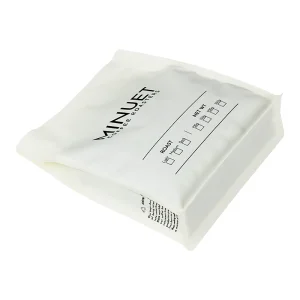
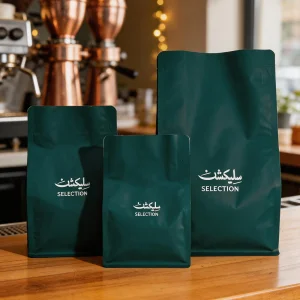
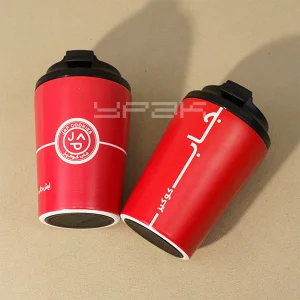
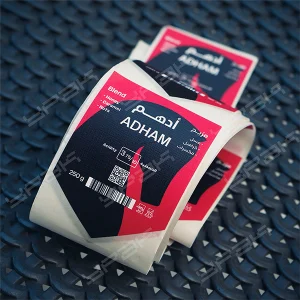
Explore our premium high-barrier heat-seal pouches, digital printed coffee packaging, and specialized promotional products.
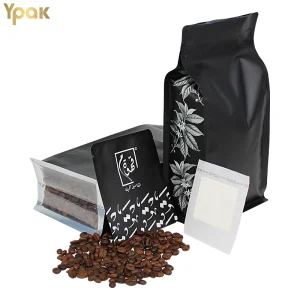
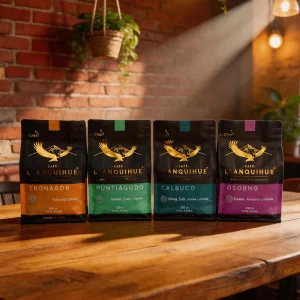
Understanding interfacial polymer diffusion, hot-tack strength dynamics, and high-barrier shelf life engineering for industrial procurement.
In high-performance Heat Seal Plastic Bags, achieving absolute hermetic containment relies on precise thermodynamic control across the sealing interface. When heat energy is applied to sealant polymers such as Linear Low-Density Polyethylene (LLDPE), Metallocene Polyethylene (mPE), or Cast Polypropylene (CPP), the polymer chains transition past their melting point ($T_m$). Under controlled pressure ($P$) and dwell time ($t$), interchain diffusion occurs across the contact boundary, creating a unified crystalline matrix upon cooling.
Sub-optimal sealing temperatures result in incomplete polymer chain entanglement, causing microscopic pinholes and delamination under transport stress. Conversely, excess thermal energy degrades the polymer backbone, causing polymer neck-in and brittle seal edges. China's top heat seal plastic bag suppliers utilize multi-zone heat bars calibrated to $\pm 1^\circ\mathrm{C}$ accuracy to guarantee seal strength exceeding ASTM F88 specifications.
To shield sensitive contents—such as specialty roasted coffee beans, cannabis edibles, or pharmaceuticals—from atmospheric oxidation and moisture degradation, advanced engineered flexible laminates combine distinct material layers:
Direct insight into our facilities in Hong Kong, Dongguan, and Foshan, certified under global food safety and quality frameworks.
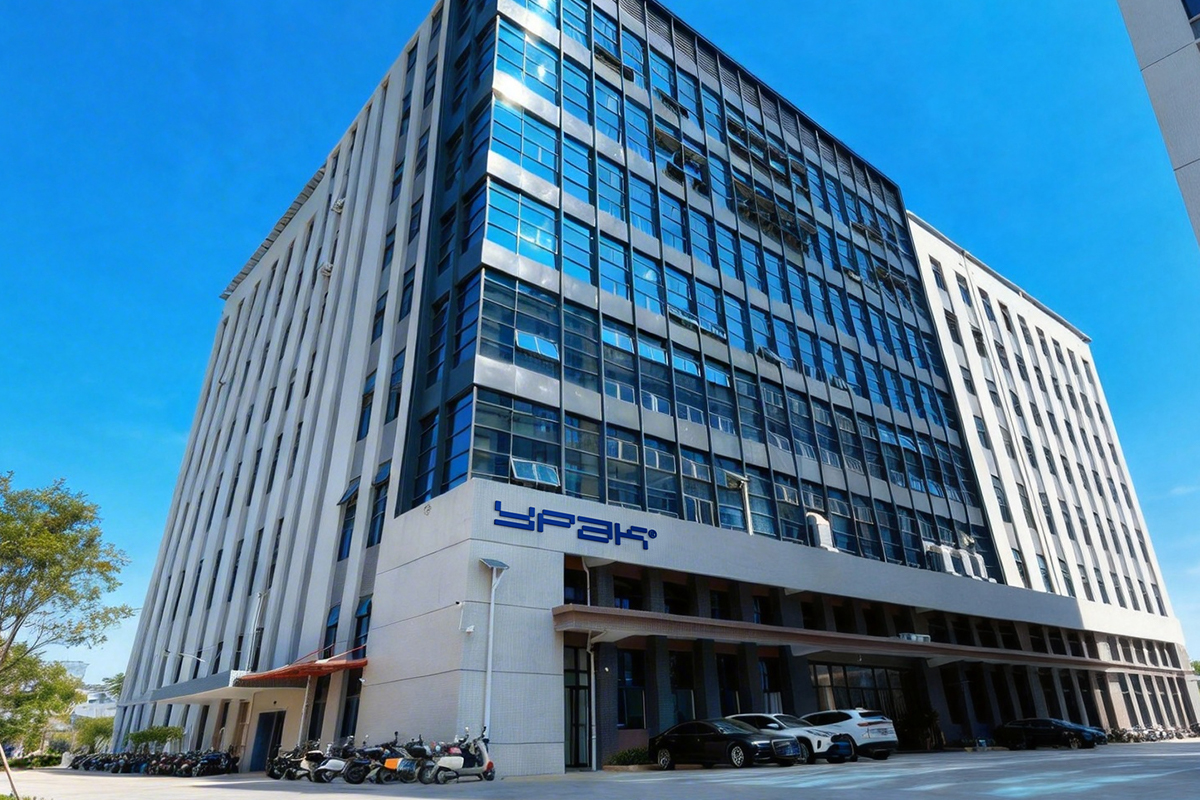
Founded in 2011, YPAK Packaging Group operates three advanced facilities across Hong Kong, Dongguan, and Foshan, emerging as one of China’s premier custom flexible packaging and heat seal bag manufacturers.
Our Foshan and Dongguan plants are fully certified under BRCGS Food Safety Grade A and ISO 22000:2018 standards—ensuring every heat-sealed pouch and high-barrier bag meets rigorous global food contact standards with full lot traceability.
We integrate Swiss-engineered WIPF one-way degassing valves as standard for coffee bean packaging, delivering world-leading technology to retain coffee freshness while releasing gas pressure. Furthermore, our HP Indigo 25K Digital Press enables plate-free, low-MOQ runs with photorealistic printing—ideal for craft brands, seasonal market testing, and rapid deployment.
With an verified 99.5% on-time delivery rate, YPAK maintains supply continuity for automated packaging lines worldwide. Our recyclable mono-material PE and industrial compostable pouches empower brands to navigate regulatory mandates in the EU, UK, and North America without sacrificing barrier performance.
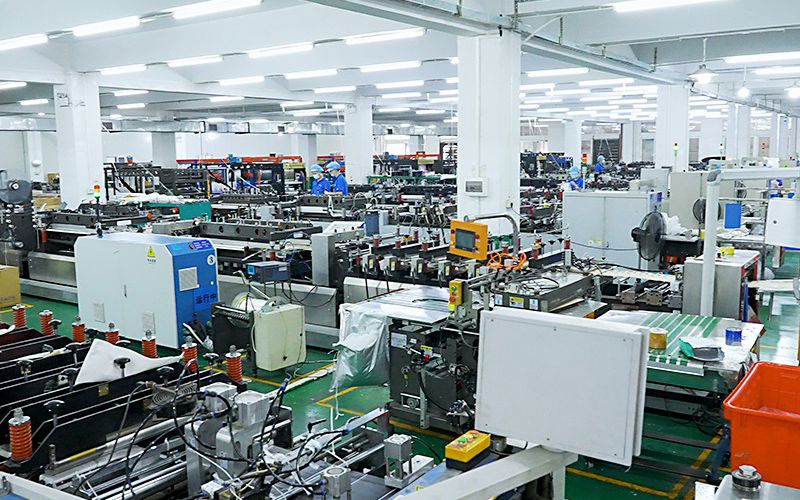
 First Complete Flexible Line
In May 2012, YPAK established its first complete flexible packaging production line with automated multi-zone sealing controls.
 Flat Bottom Bag Innovation
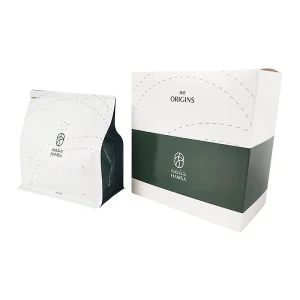
In March 2016, launched dedicated production for premium box pouches / flat bottom coffee bags with box gusset sealing.
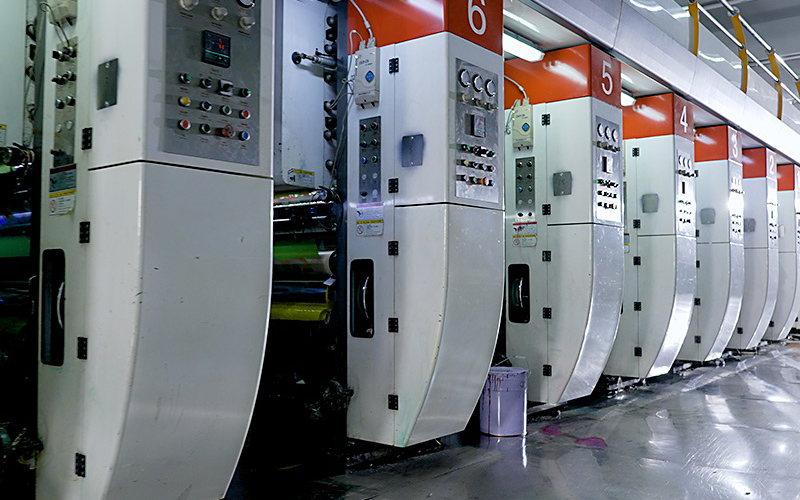 High-Speed Capacity Expansion
In August 2017, established our second high-speed conversion line, expanding output capacity for international OEM partners.
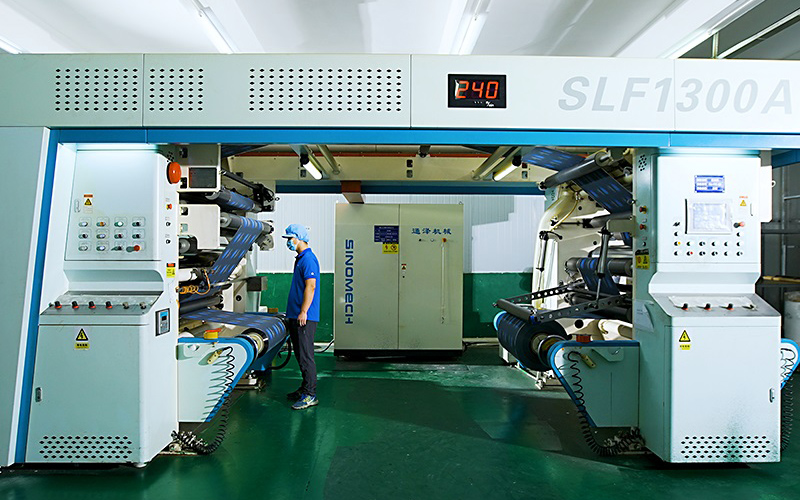 Solvent-Free Lamination
In April 2018, transitioned to 100% solvent-free composite lamination technology, eliminating VOC emissions and chemical residues.
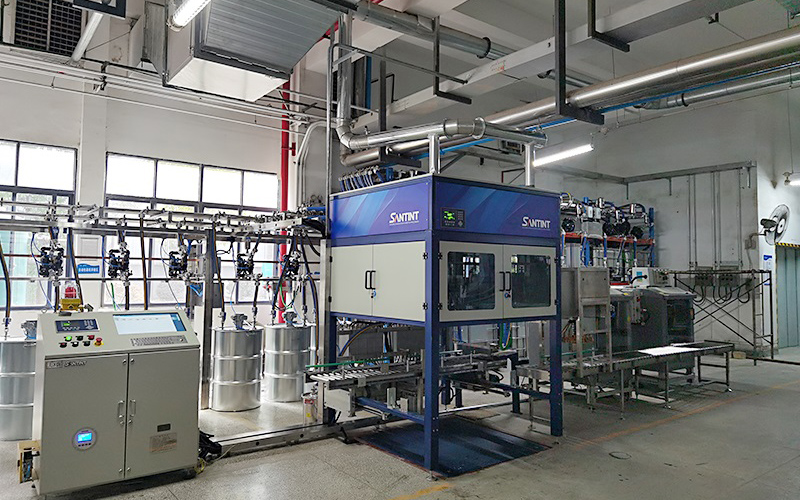 Automated Ink Control
In June 2020, introduced closed-loop automatic ink viscosity and spectrophotometric color management systems.
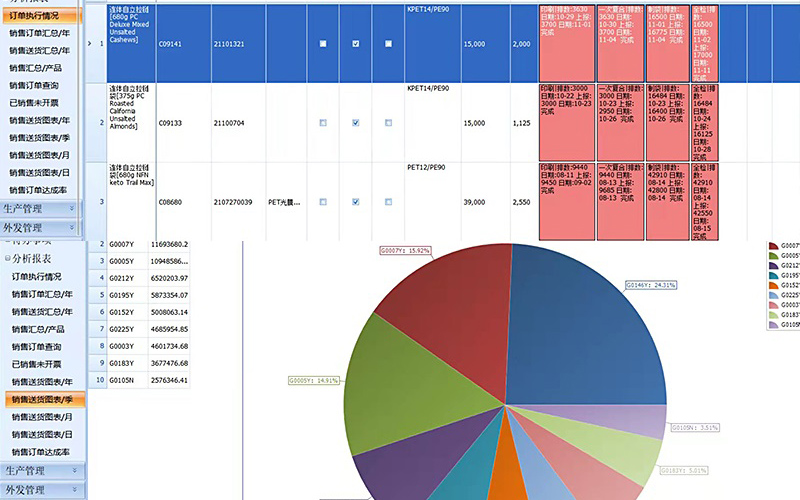 Industry 4.0 ERP Systems
In July 2020, fully implemented enterprise-wide ERP production tracking, granting real-time material and batch visibility.
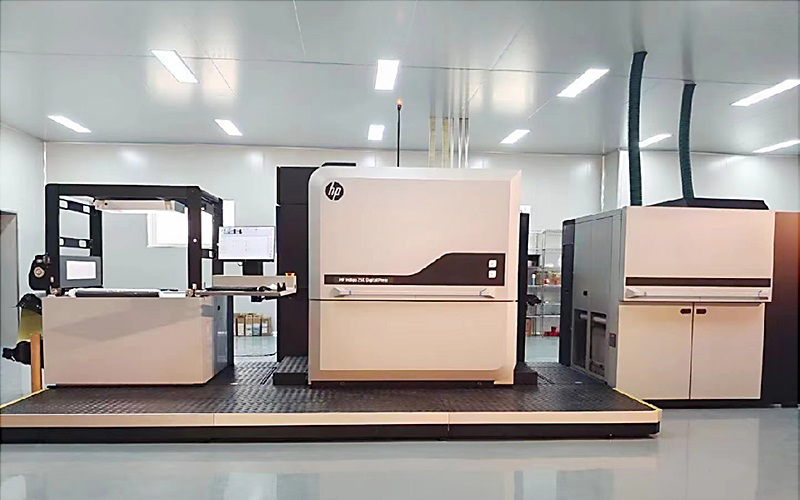 HP Indigo 25K Digital Press
In October 2021, integrated the HP INDIGO 25K digital press, empowering zero-MOQ flexibility with high-end print resolution.
How localized polymer synthesis, solvent-free composite lines, and ERP digitizing drive cost advantages and zero-defect quality.
China accounts for over 45% of global resin synthesis and film extrusion capacity. Located in Guangdong’s manufacturing core, YPAK directly sources specialized resins—including metallocene PE, EVOH polymers, and compostable PLA resins—at factory-direct pricing. This vertical integration allows us to cushion global buyers against raw material spot-market volatility while ensuring raw polymer purities.
Unlike traditional solvent-based adhesive laminators that require gas-fired drying tunnels and risk chemical odor retention in food pouches, our solvent-free lamination technology utilizes 100% solid reactive polyurethane adhesives. This guarantees zero solvent retention (GC tested < 2 mg/m²), superior bond strength (> 2.5 N/15mm), and significantly lower carbon emissions per thousand bags.
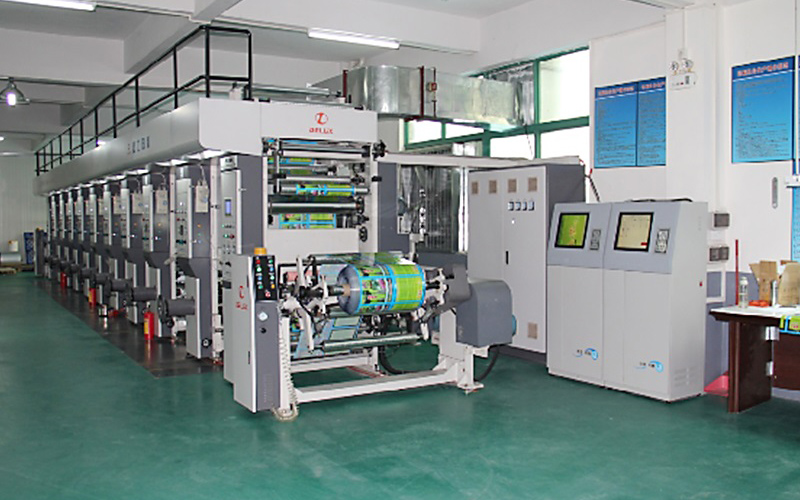
We bridge low-volume flexibility and high-volume cost efficiency. For short-run seasonal promotions or SKU-rich product lines, our HP Indigo 25K press eliminates cylinders and plate setup fees. For high-volume contracts (100,000+ units), our 10-color high-speed gravure presses deliver print speeds up to 350 meters/minute with inline automatic ink viscosity and defect inspection.
Tailored material specs and structural designs across global market verticals.
| Industry Vertical | Recommended Layer Structure | Key Barrier & Functional Features | Target Regulatory Compliance |
|---|---|---|---|
| Specialty Roasted Coffee | Matte PET / VMPET / LLDPE (or Mono-PE) | Swiss WIPF One-Way Degassing Valve, Pocket Zipper, < 0.5 cc/m²/24h OTR | FDA 21 CFR 177.1520, EU 10/2011 |
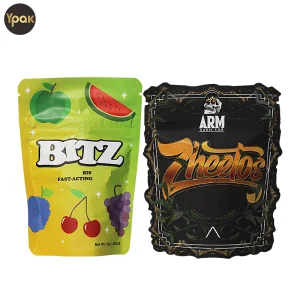
| Cannabis & Edibles | Soft-Touch PET / ALU / LLDPE | ASTM D3475 Certified Child-Resistant Zipper, Total Light Shielding, Zero Odor Leak | US CPSC 16 CFR 1700.20, ISO 8317 |
| Snacks & Organic Foods | Kraft Paper / PLA / PBAT (Compostable) | 100% Industrial Compostable, High Clarity Window Option, Seal-through-dust PE | EN 13432, ASTM D6400, Seedling Certified |
| Nutraceutical Powders | PET / OPA Nylon / LLDPE | High Puncture Resistance, Anti-Static Inner Layer, Moisture Barrier < 0.1 g/m²/24h | BRCGS Food Safety, GMP Packaging |
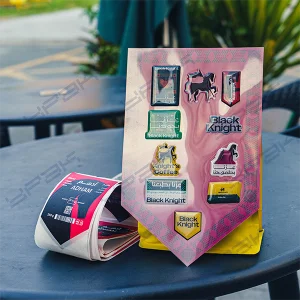
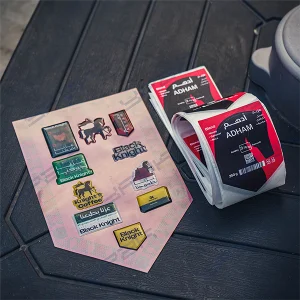
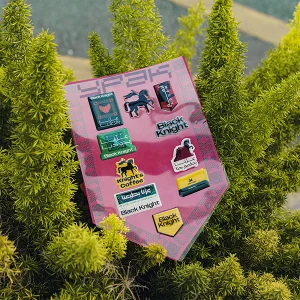
| Promotional & Branding | PVC / Vinyl / Epoxy Resin Base | 3D Resin Gel Epoxy Dome, Waterproof UV Inks, Heavy-Duty Die-Cut Adhesion | REACH, RoHS Non-Toxic Standard |
Pioneering the shift from multi-material non-recyclable laminates to circular Mono-PE and bio-based polymers.
Conventional pouch laminates (PET/ALU/PE) are impossible to recycle via standard municipal streams due to incompatible layer melting points. YPAK’s R&D team has developed mono-material PE pouches using Machine Direction Oriented Polyethylene (MDO-PE) outer films laminated to EVOH-enhanced Low-Density PE. The resulting bag can be disposed of directly in RIC #4 PE recycling streams without sacrificing oxygen or moisture barrier capabilities.
Formulated from renewable plant starches (corn and sugarcane derivatives), our compostable heat seal bags utilize Polylactic Acid (PLA) and Polybutylene Adipate Terephthalate (PBAT) substrates. Under industrial composting conditions ($58^\circ\mathrm{C}$ ambient temperature with micro-organism activity), these bags breakdown fully into water, carbon dioxide, and organic biomass within 180 days, adhering strictly to EN 13432 and ASTM D6400 standards.
Integrating unique variable QR codes, invisible digital watermark matrixes, and NFC tags into heat-sealed pouches allows brands to offer instant consumer authentication, interactive supply chain traceability, and automated batch tracking from factory floor to retail shelves.
Integrating pre-sales online video confirmation, real-time mid-sales production tracking, and dedicated after-sales support.
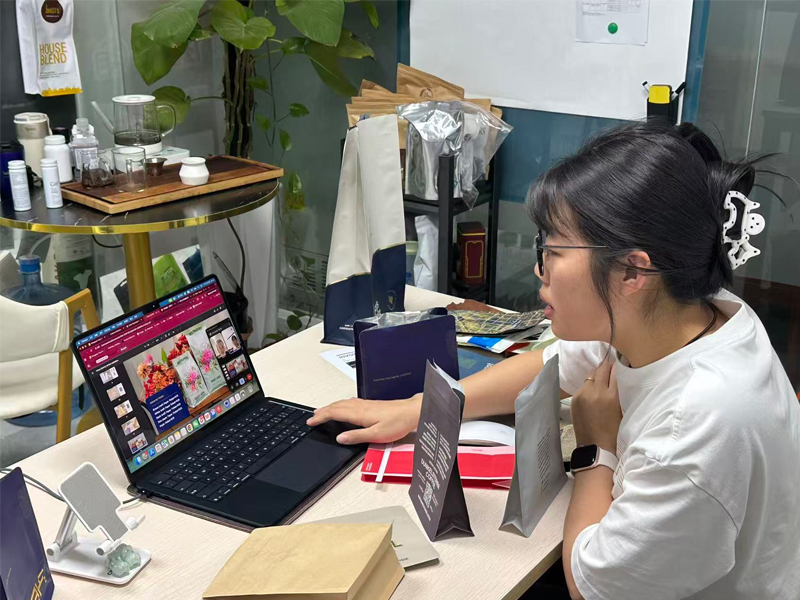
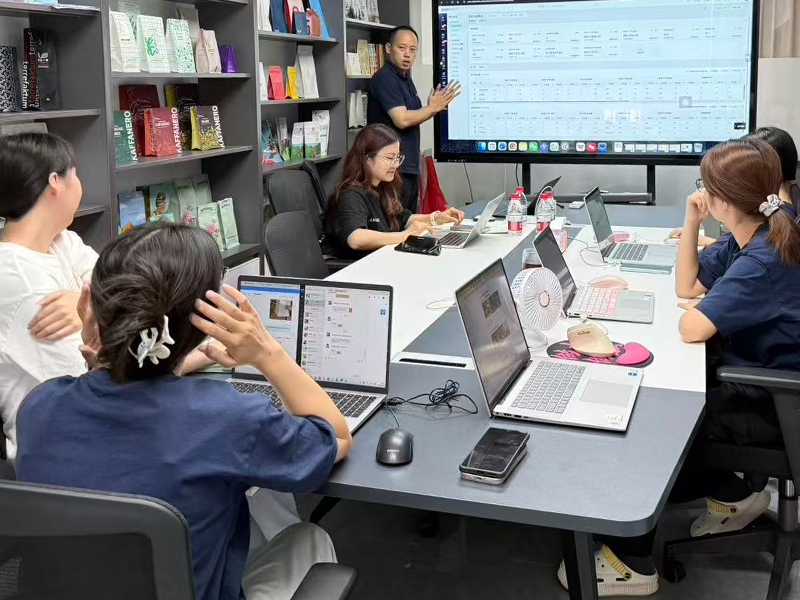
Improve customer experience through online video confirmation.
One of the keys to meeting customer needs is providing excellent pre-sales service, which helps build a solid foundation for long-term relationships. We provide one-on-one service to ensure accurate and efficient technical communication.
Traditionally, pre-sales service involves assisting customers in selecting the correct product or service, understanding its features, and resolving any technical queries. However, this process can be time-consuming and present challenges when confirming complex physical details. With online video confirmation, YPAK eliminates the guesswork, providing personalized visual audits of material textures, valve placements, pouch dimensions, and color proofs prior to mass production runs.
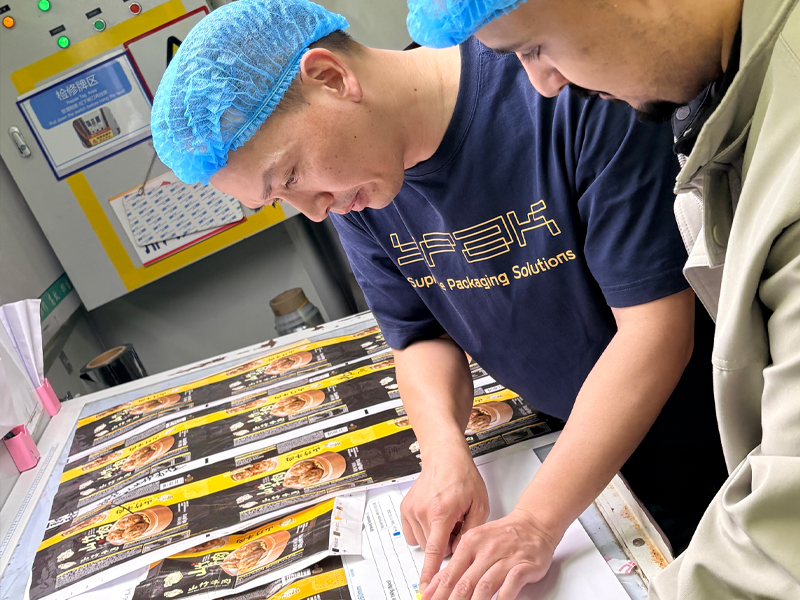
Exceptional mid-sale service for seamless execution.
Mid-sale service is an essential phase that ensures a seamless transition from the initial artwork approval to final factory shipment. Our focus is maintaining rigorous control over the production process by closely monitoring and managing each stage of extrusion, printing, lamination, curing, and pouch converting.
We send real-time video clips and high-resolution photo logs of your production run. This allows international procurement officers to visually inspect ink registration, heat seal integrity, and pouch geometry, providing absolute peace of mind while your goods are on the machine.
Long-term partnership & continuous quality commitment.
Providing exceptional after-sales service not only ensures customer satisfaction but also enhances long-term supply partnerships, yielding repeatable success and positive brand recognition.
By investing in staff training programs and establishing responsive feedback channels, YPAK continuously refines after-sales technical advisory. From assisting your packing facility with heat-sealing bar temperature parameters to managing warranty claims and inventory replenishment, we guarantee enduring reliability in competitive global markets.
Evaluating Total Cost of Ownership (TCO), tariff optimization, container load efficiency, and risk mitigation.
When procuring from a China heat seal plastic bags supplier, evaluating unit price alone often obscures total cost dynamics. Landed cost components include ocean freight, import duties (HS Code 3923.21 / 3923.29), port handling fees, and warehousing holding costs. YPAK provides optimized carton dimensions and palletization layouts that maximize 40ft HQ container loading density by up to 18%, significantly lowering per-unit transport expenses.
A pouch failure on an automated Form-Fill-Seal (FFS) packaging line can cost thousands of dollars per hour in product loss and machine downtime. YPAK’s strict adherence to BRCGS Grade-A standards ensures consistent coefficient of friction (COF 0.20 – 0.25) across film surfaces, uniform pouch width tolerances ($\pm 1.0\mathrm{mm}$), and 100% burst test validation, protecting your downstream operations.
In-depth technical answers addressing polymer dynamics, testing protocols, custom order requirements, and regulatory compliance.
The optimal sealing temperature depends on the sealant layer chemistry. Standard LLDPE sealant layers seal between $130^\circ\mathrm{C}$ and $160^\circ\mathrm{C}$, whereas high-speed Metallocene PE (mPE) allows lower initiation temperatures around $115^\circ\mathrm{C} - 135^\circ\mathrm{C}$. For heat-resistant CPP or retort pouches, temperatures range from $170^\circ\mathrm{C}$ to $200^\circ\mathrm{C}$. We provide exact machine calibration settings with every shipment.
Roasted coffee beans emit carbon dioxide gas ($CO_2$) for weeks post-roasting. A Swiss WIPF one-way degassing valve contains a precision rubber diaphragm held under controlled spring tension. When internal pouch pressure exceeds external atmospheric pressure by $\sim 3\mathrm{mbar}$, the valve opens to vent $CO_2$ while preventing external oxygen ($O_2$) from entering, preserving volatile aroma compounds and preventing bag rupture.
Seal strength is tested according to ASTM F88 (Standard Test Method for Seal Strength of Flexible Barrier Materials). Test strips cut to 15mm width are pulled at $300\mathrm{mm/min}$ on an automated tensile tester. YPAK specifications guarantee seal strength exceeding $35\mathrm{N}/15\mathrm{mm}$ for standard laminates and $> 50\mathrm{N}/15\mathrm{mm}$ for heavy-duty industrial gusset pouches.
HP Indigo digital printing utilizes ElectroInk technology, eliminating mechanical printing plates and setup fees. It is ideal for short runs (100 to 10,000 bags), multi-SKU variations, variable data/QR coding, and fast turnaround (5-7 days). Gravure printing requires initial cylinder investment but offers unmatched per-unit cost efficiency for large volume runs (50,000+ units) with speed up to 350m/min.
Our Foshan and Dongguan production facilities hold BRCGS Global Standard for Packaging Materials (Grade A) certification and ISO 22000:2018 Food Safety Management System certification. All raw materials conform to US FDA 21 CFR 177.1520 and EU Regulation 10/2011 for direct food contact.
We utilize 100% solvent-free polyurethane adhesives across our composite lamination lines. Unlike solvent-based systems that rely on evaporation tunnels, solvent-free adhesives cure chemically without organic solvents. Every production batch undergoes gas chromatography testing to ensure total residual solvents remain well below $2.0\mathrm{mg/m^2}$.
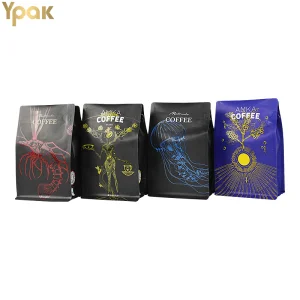
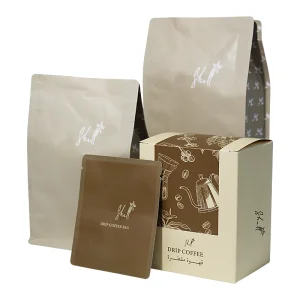
Discover our range of digital printed kraft bags, child-resistant packaging, sticker solutions, and specialized stand-up pouches.
 YPAK PACKAGING