Barrier Packaging Degassing Performance depends on more than a film’s published barrier rating. It reflects how gases move, accumulate, and escape under real packaging conditions. Oxygen transmission, carbon dioxide release, moisture control, seal integrity, and package geometry can all change the result. Small details matter.
This guide examines the top ten factors that influence degassing behavior in barrier packaging. It considers material structure, coating quality, valve design, headspace volume, filling temperature, product pressure, and storage conditions. A multilayer film may offer excellent oxygen protection, yet perform poorly if its seals channel gas or its venting system becomes restricted. A package tested at room temperature may behave differently in a hot warehouse or during transport. Real conditions differ.
Reliable evaluation requires more than supplier data. Practical testing should measure pressure changes, gas composition, leakage, and barrier stability over time. It should also reflect the intended product, fill weight, package size, and handling cycle. No test is perfect. Results can shift when operators, equipment, or environmental conditions change. That limitation deserves attention, not concealment. Experience from production trials remains valuable because it reveals wrinkles, inconsistent seals, blocked valves, and unexpected deformation. Laboratory evidence provides control; field evidence provides context. Together, they support more credible decisions about Barrier Packaging Degassing Performance. This approach helps engineers, quality teams, and packaging buyers compare solutions with greater confidence and fewer assumptions.
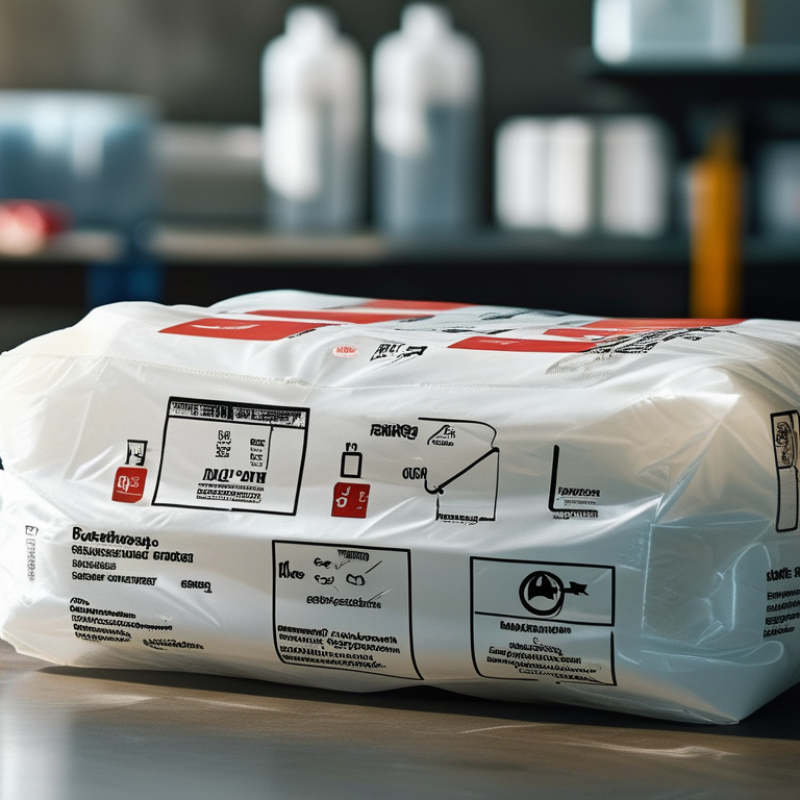
Selecting a barrier material starts with the product’s gas behavior, not only its shelf-life target. Roasted coffee, for example, can release carbon dioxide after filling. A package must control oxygen entry while allowing internal pressure to escape safely. That balance depends on oxygen transmission rate, carbon dioxide transmission rate, and seal integrity.
Common structures combine polyethylene for sealing, polyester for strength, and a high-barrier layer. Ethylene vinyl alcohol can provide strong oxygen resistance under dry conditions. However, its performance may weaken in high humidity. Polyamide improves toughness but usually needs support from another barrier layer. Aluminum foil offers extremely low gas transmission, yet pinholes and poor forming can reduce real-world protection.
Testing should match actual storage conditions. I compare samples at different temperatures and humidity levels, then inspect seals, folds, and punctures. A film showing excellent laboratory results may perform poorly after pouch forming. Thickness matters, but thicker is not always better. Material orientation, coating quality, and layer adhesion can change degassing behavior.
A practical trial should monitor package pressure, headspace oxygen, and carbon dioxide over time. Small changes can reveal unstable transmission rates. I have seen teams choose the lowest oxygen transmission material and overlook excessive pressure buildup. That decision needed revision. Barrier packaging is a controlled compromise, not a search for one perfect material.
Seal integrity strongly influences how a barrier package releases trapped gas. A weak seal may leak during degassing, filling, or storage. A closure must match the film, tray, and product pressure. In production trials, I have seen small wrinkles create continuous leak paths. Seal width, temperature, pressure, and dwell time need controlled settings. A wider seal is not always safer. Excess heat can distort the barrier layer and reduce opening performance.
Closure design also affects pressure balance. Vented closures can release gas while limiting moisture and oxygen entry. Their vent path should remain clear after sealing. Thread depth, liner compression, and cap torque require practical testing. Useful methods include vacuum decay, burst testing, dye penetration, and torque checks. These tests reveal different failures. No single method proves complete package reliability. That assumption deserves review.
Tips: Inspect seal surfaces under magnification. Measure seal width at several points. Test packages after transport simulation and temperature changes. Record every leak location, not only the failure rate. Keep closure components clean and aligned. A simple fixture can expose uneven compression. Recheck results after storage, because a seal that passes today may creep tomorrow.
Top 10 Barrier Packaging Degassing Performance Factors
Vacuum Level, Headspace, and Degassing Conditions
Vacuum level controls how quickly trapped air leaves a barrier package. However, a deeper vacuum does not always produce better results. Excessive pressure reduction can cause foaming, seal distortion, or sudden product expansion. Measure the actual chamber pressure, not only the machine setting. A calibrated sensor near the package gives more reliable data. Record pressure, temperature, hold time, and recovery rate for every trial.
Headspace also matters. A large air pocket requires more evacuation time and may reduce package stability after sealing. A smaller, controlled headspace usually improves consistency, but filling variation can create new problems. Degassing conditions should match the product’s viscosity, temperature, and gas content. Warmer materials release dissolved gases faster, yet heat may weaken some films or affect seal quality. Slow pressure ramps can prevent splashing and uneven collapse. Gentle vibration may help, but it can also introduce bubbles if poorly controlled.
Inspect sealed samples after 24 and 72 hours. Look for paneling, seal creep, internal bubbles, and changes in package shape. It is tempting to judge performance immediately. That can be misleading. Some failures appear only after storage or temperature cycling. A practical test plan should compare several vacuum levels and headspace targets, rather than assuming one setting fits every format. Small process differences often matter more than expected.
| No. | Performance Factor | Typical Engineering Range | Effect on Degassing | Practical Guidance | Monitoring Method |
|---|---|---|---|---|---|
| 1 | Absolute Vacuum Level | 20–50 kPa absolute (approximately 15–25 inHg vacuum at sea level) |
Lower absolute pressure increases bubble expansion and gas removal, but excessive vacuum can cause package deformation, foaming, or product boiling. | Use the lowest pressure that removes visible entrained air without damaging the product or flexible barrier structure. Validate at the actual operating altitude. | Calibrated absolute-pressure transducer; record minimum pressure and pressure recovery. |
| 2 | Headspace Volume | Approximately 5–15% of package volume for many flexible formats | A larger headspace provides more gas to remove and may increase residual oxygen. An extremely small headspace can restrict vacuum communication and create seal contamination risk. | Control fill volume and package geometry consistently. Define a target headspace rather than relying only on machine vacuum settings. | Gravimetric fill check, dimensional measurement, or non-destructive volume analysis. |
| 3 | Vacuum Dwell Time | Typically 10–60 seconds, depending on product viscosity and package size | Longer dwell allows dissolved and entrained gas to migrate toward the headspace, but the benefit decreases once pressure and bubble volume stabilize. | Increase dwell time for viscous, particulate, or high-solids products. Confirm that added time improves residual-air results rather than only reducing throughput. | Recipe-controlled timer plus residual-bubble or dissolved-oxygen testing. |
| 4 | Product Temperature | Often controlled within ±2–5°C of the validated filling temperature | Higher temperature generally lowers viscosity and improves bubble mobility, but it can increase vapor pressure, oxidation rate, or thermal damage. | Use temperature only within the product’s validated stability and safety limits. Avoid treating heat as a substitute for correct vacuum control. | In-line or calibrated product-temperature probe at the filling point. |
| 5 | Product Viscosity | Low-viscosity liquids typically flow below 1,000 mPa·s; high-viscosity products may exceed 10,000 mPa·s | Higher viscosity slows bubble rise and gas diffusion, requiring more time, lower shear, or a carefully designed vacuum profile. | Measure viscosity at the actual fill temperature and use that value when setting vacuum, dwell time, and line speed. | Rotational viscometer or in-line rheology measurement. |
| 6 | Filling Turbulence and Shear | Use the lowest validated pump speed and drop height that maintains stable production | High turbulence entrains air and creates small bubbles that are more difficult to remove than large, freely rising bubbles. | Use submerged or bottom-up filling where suitable, minimize free-fall distance, and avoid abrupt valve opening and closing. | Pump-speed trend, flow-rate measurement, and visual bubble inspection. |
| 7 | Dissolved Gas and Foam Stability | Dissolved oxygen targets are product-specific; many oxygen-sensitive applications use low-ppm specifications | Surfactants, proteins, polymers, and fine particles can stabilize foam and slow the release of dissolved or entrained gas. | Control agitation and recirculation, allow adequate process equilibration, and validate any antifoam or deaeration step for product compatibility. | Dissolved-oxygen meter, foam-height measurement, and visual inspection. |
| 8 | Barrier Material Performance | High-barrier films may achieve OTR below 1 cc/m²/day and WVTR below 0.1 g/m²/day under specified test conditions | Low oxygen and moisture transmission helps preserve the degassed condition during storage, but reported values depend strongly on temperature, humidity, thickness, and test method. | Compare material data using identical ASTM or ISO test conditions. Evaluate the complete laminate, not only a single barrier layer. | OTR and WVTR testing; review data at the intended temperature and relative humidity. |
| 9 | Seal Integrity and Leak Rate | Set an application-specific leak limit; package integrity tests should demonstrate no channel leaks or seal failures | A microchannel, weak seal, or contaminated seal area can allow air ingress and rapidly offset the benefits of vacuum degassing. | Control seal temperature, pressure, dwell, jaw alignment, and contamination. Test both immediately after sealing and after conditioning. | Dye penetration, bubble-emission, vacuum-decay, pressure-decay, or tracer-gas testing. |
| 10 | Ambient Pressure and Altitude | Standard sea-level pressure is approximately 101.3 kPa absolute; pressure decreases with elevation | A machine displaying the same gauge vacuum can produce a different absolute pressure at different elevations, affecting gas expansion and final package pressure. | Specify and control vacuum using absolute pressure where possible. Revalidate settings when equipment is relocated or used at high altitude. | Absolute-pressure measurement, site-altitude record, and package-pressure verification. |
Degassing performance begins with the product, not the package. Roasted coffee may release several liters of carbon dioxide per kilogram, according to published coffee-packaging studies. Fresh roasting, finer grinding, and warmer storage usually accelerate release. Powders behave differently. Their small particles create narrow channels, so gas can escape unevenly and push against weak seals. Moisture also matters. Hygroscopic products may absorb water, swell, and change their internal pressure.
Temperature is a quiet driver. A 10°C increase can significantly raise gas generation and diffusion rates, although the exact response depends on product chemistry. Technical evaluations using ASTM D3985 often target oxygen transmission below 1.0 cc/m²/day for demanding barrier applications. That figure alone is insufficient.
A low oxygen rate cannot prevent pressure buildup if carbon dioxide has no controlled exit path. Product density, fill weight, residual headspace, and package flexibility must be measured together.
Small details matter.
Industry testing commonly combines ASTM F2096 bubble-emission testing with pressure-decay or gas-composition analysis. These methods reveal different failures. One may detect a seal leak, while another shows slow carbon dioxide accumulation. Packaging teams should test immediately after filling, during warm storage, and after transport simulation. A valve can help, but it may clog with fine particles or respond too slowly. This is where practical experience challenges laboratory assumptions. The model is not perfect. Real products age, settle, and release gas unevenly.
Degassing performance shows how quickly trapped air and vapors leave barrier packaging. It affects seal quality, paneling, odor, and product stability. Testing should match the package structure, filling process, and storage environment. A flexible pouch may release gas differently from a rigid tray.
A practical method uses a pressure-rise test. Place sealed samples in a controlled chamber, then monitor pressure changes over time. A slower pressure increase may indicate better degassing control. Record temperature carefully, because warm materials release gas faster. Headspace gas analysis provides another useful view. It measures oxygen, carbon dioxide, or other permitted gases after fixed conditioning periods. Small sampling errors can distort results. Handle samples gently.
Visual inspection still matters. Measure panel movement, seal distortion, and pouch thickness at set intervals. Our first protocol relied too heavily on pressure data. It missed slight bubbling near the seal area. A better study combines pressure testing, headspace analysis, and dimensional checks. Use several production batches, not one convenient sample group. Include short and extended conditioning periods, such as 24 hours and seven days. Repeatability is essential, yet it is often overlooked. Compare results against defined acceptance limits, while documenting equipment calibration, sample age, humidity, and temperature. These details make the findings more reliable and easier to challenge constructively.
Start with the product’s gas behavior, not only its shelf-life target. Roasted coffee may release carbon dioxide after filling. The package must limit oxygen entry and manage internal pressure. Small details matter.
A low oxygen rate does not prevent carbon dioxide buildup. Excess pressure can distort panels or weaken seals. Test oxygen and carbon dioxide movement together. One target is not enough.
Warmer storage usually increases gas generation and diffusion. A 10°C rise can change results significantly. Test samples at realistic temperatures. Cold-room data may mislead.
Fresh roasting, fine grinding, and higher fill temperatures can accelerate release. Product density and residual headspace also matter. Powder particles may form narrow gas channels. Release can become uneven.
No. Thickness helps, but orientation, coating quality, and layer adhesion also matter. Folding or forming may create weak points. Thicker is not always better.
Combine pressure-rise testing, headspace gas analysis, and visual inspection. Check seal distortion, bubbling, panel movement, and pouch thickness. Use samples from several production batches. A single batch is weak evidence.
Test samples immediately after filling, during warm storage, and after transport simulation. Compare short and extended periods, such as 24 hours and seven days. Record temperature and humidity carefully.
A valve may help control internal pressure. Fine particles can clog it, or its response may be too slow. Check valve behavior with the actual product. Our first assumption was too simple.
Do not rely only on laboratory pressure data. Slight bubbling near a seal may reveal a hidden problem. Inspect folds, punctures, and seals directly. The model is not perfect.
Barrier Packaging Degassing Performance depends on the coordinated design of materials, seals, package geometry, and processing conditions. Selecting a barrier material requires balancing protection against oxygen, moisture, and other gases with the package’s ability to release trapped air or product-generated gases. Seal integrity and closure design are equally important, since weak, uneven, or poorly aligned seals can permit gas leakage and reduce package stability. Vacuum level, headspace volume, and degassing conditions must also be controlled to prevent excessive pressure, deformation, or incomplete gas removal.
Product characteristics strongly influence performance because moisture, temperature, particle structure, and ongoing gas release can change internal pressure over time. Reliable evaluation should therefore combine visual inspection, leak detection, pressure or vacuum monitoring, and gas transmission testing under realistic storage conditions. By considering these ten factors together, manufacturers can improve package consistency, protect product quality, and establish a more dependable degassing process.
YPAK PACKAGING