How to Choose High Barrier Packaging Film?

Time:2026-10-09 Author:Ethan
0%

Choosing the right Barrier Packaging High Barrier Film begins with the product, not the film catalogue. A delicate snack, oxygen-sensitive coffee, medical device, and moisture-prone powder face different risks. Each needs a clear protection target.

Packaging scientist Dr. Susan Selke offers a practical reminder: “Packaging is a system, not just a material.” This idea should guide every film decision. A high barrier layer may limit oxygen transmission, moisture transfer, aroma loss, and light exposure. Yet its performance depends on seal quality, thickness, temperature, filling speed, and storage conditions. A brilliant film can fail through a weak seal.

Look closely at the product’s journey. Will the package sit beside a warm warehouse wall? Will it face freezing transport, sharp filling equipment, or repeated handling? These details matter. Ask for oxygen transmission rate, water vapor transmission rate, seal-strength data, and test conditions. Do not compare figures without checking the measurement standards.

Our guide explains how to match Barrier Packaging High Barrier Film with real packaging demands. It examines multilayer structures, coating choices, recyclable options, converting performance, and cost. It also considers shelf-life testing rather than relying on attractive technical claims.

There is no perfect film.

A lower-cost structure may increase waste if it creates leaks. A thicker structure may protect better, but it can complicate sustainability goals. The right choice is often a careful compromise. Product sensitivity, machinery limits, environmental exposure, and end-of-life expectations must be reviewed together. Some decisions will remain uncertain until pilot testing reveals the truth.
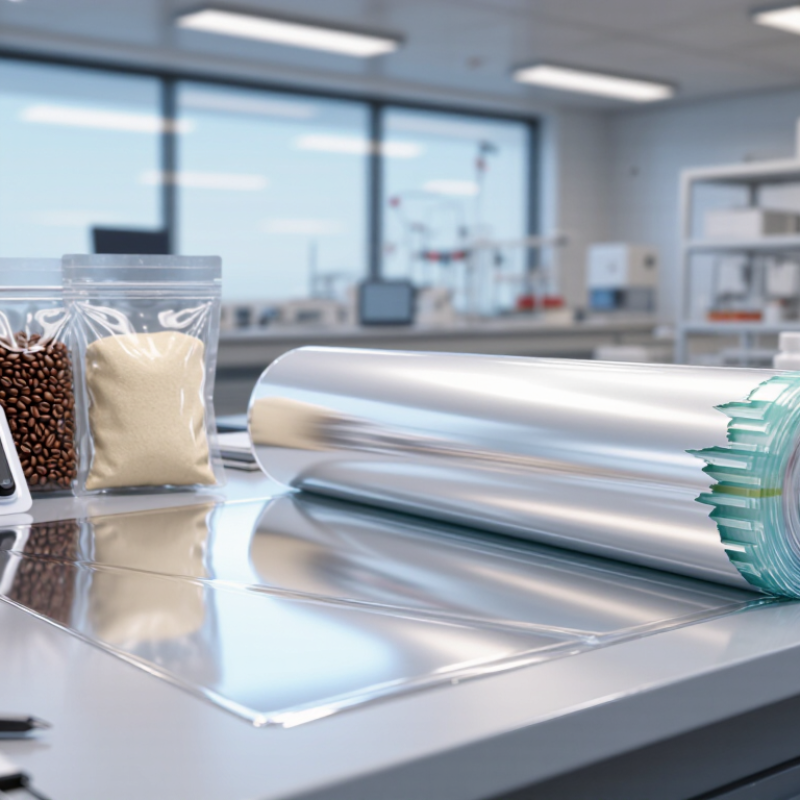
How to Choose High Barrier Packaging Film?

What Is High Barrier Packaging Film?

How to Choose High Barrier Packaging Film?

High barrier packaging film is designed to slow the movement of oxygen, water vapor, light, and aromas. It helps protect food, medicine, and sensitive products during storage and transport. Unlike a basic plastic film, it usually combines several layers. Each layer performs a specific task, such as sealing, printing, strength, or barrier protection.

In practical packaging trials, oxygen transmission rate and water vapor transmission rate are key measurements. Lower values usually indicate stronger protection, but numbers alone can mislead. Film performance changes with temperature, humidity, thickness, and handling. A sharp fold may create tiny cracks in a metallized layer. A weak seal can also defeat an excellent barrier film. No film is perfect. This is easy to forget.

Tips: Match the film to the product’s real risks. Choose moisture resistance for powdery goods, and oxygen resistance for oxidation-sensitive products. Check seal strength, puncture resistance, and storage conditions. Ask for laboratory data from the actual film structure, not a similar sample. Small details matter. A packaging engineer should also test filled packs after transport simulation. Vibration, compression, and repeated flexing may expose weaknesses that flat laboratory tests miss. Sometimes, a slightly thicker structure is more reliable than a cheaper film with impressive barrier figures. Cost matters, but product loss costs more.

How to Choose High Barrier Packaging Film?

What Is High Barrier Packaging Film?

High barrier packaging film helps protect products from oxygen and moisture. The chart compares indicative oxygen transmission rate (OTR) values for common film materials. Lower OTR means stronger oxygen-barrier performance. Actual results vary with film thickness, humidity, temperature, coating quality, and laminate structure.

Typical OTR at approximately 23°C and 50% relative humidity, expressed in cc/m²/day. EVOH, metallized PET, and aluminum foil laminates are commonly selected when high oxygen protection is required.

Which Barrier Properties Should You Evaluate?

How to Choose High Barrier Packaging Film?

Which Barrier Properties Should You Evaluate?

A high barrier film should be selected by measured performance, not by thickness alone. Start with oxygen transmission rate, or OTR. It is reported in cc/m²/day. Lower values usually provide stronger protection against oxidation, color loss, and flavor changes. Water vapor transmission rate, or WVTR, is equally important. It is measured in g/m²/day. A low WVTR helps protect powders, snacks, and moisture-sensitive products from humidity.

Test conditions matter. ASTM D3985 evaluates oxygen transmission, while ASTM F1249 measures water vapor transmission. Results should state temperature and relative humidity clearly. A film tested at 23°C and 50% relative humidity may perform differently in a hot warehouse. Humidity can weaken some barrier layers. Flexing can create microscopic cracks. The laboratory result is not always the package result.

Packaging decisions should also consider the product’s actual shelf-life target. The FAO’s 2019 State of Food and Agriculture report estimated that 14% of food is lost between harvest and retail. The UNEP Food Waste Index Report 2024 estimated 1.05 billion tonnes of food waste in 2022. Better barrier control may reduce some losses, but it cannot solve poor sealing or unsuitable storage. That shortcut is tempting. It is also incomplete. Evaluate OTR, WVTR, seal strength, puncture resistance, and performance after bending. A low barrier number alone does not guarantee reliable protection.

How to Match Film Structure With Product Requirements

Choosing high-barrier packaging film starts with the product, not the machine. Define oxygen, moisture, light, aroma, temperature, and seal requirements first. Roasted coffee may need strong oxygen protection and aroma retention. A foil-based laminate can provide this protection, while EVOH offers a lighter alternative in suitable conditions. Moisture-sensitive powders often require a polyethylene sealing layer and a high-barrier core. The sealant must survive filling speed, dust, and heat.

Film structure must also match distribution and use. Retort foods need heat-resistant layers, stable adhesive systems, and reliable seals after sterilization. Frozen products need flexibility because brittle films may crack during storage. For transparent packs, metallized films or coated polymers can balance shelf visibility with barrier performance. Do not choose by thickness alone. A thicker film may still fail if pinholes, poor lamination, or weak seals exist.

The Flexible Packaging Association reported U.S. flexible packaging sales near 39.5 billion dollars in 2023, showing the scale of performance expectations. Smithers’ industry analysis also identifies barrier improvement and recyclable structures as major development priorities through 2028. These trends matter, but laboratory results cannot replace production trials. Test the finished structure under real humidity, transport, filling, and shelf-life conditions. Be careful with impressive laboratory numbers. They may not represent a dusty factory floor or repeated handling. ASTM-based oxygen and water-vapor transmission tests help, but package-level validation remains essential. Oversimplifying the structure is a common mistake.

How to Compare Processing, Sustainability, and Cost

How to Choose High Barrier Packaging Film?

Comparing high barrier films starts on the converting line, not in a spreadsheet. A film with excellent oxygen and moisture protection may need higher drying temperatures, slower speeds, or more careful sealing. Measure seal-window width, web tension, coating uniformity, and scrap during a controlled trial. Record downtime beside material consumption. The cheapest structure can still become an expensive mistake.

Sustainability needs practical evidence. The OECD Global Plastics Outlook reports that only 9% of plastic waste was recycled globally in 2019. Therefore, a recyclable claim means little without checking local collection and sorting systems. Mono-material structures may simplify recycling, but they can sacrifice barrier performance or require thicker layers. UNEP’s Turning off the Tap report estimates that plastic pollution could be reduced by 80% by 2040 through system-wide changes. Film selection is only one part. I would not pretend that one structure wins every application.

Tips: Compare total cost per packed unit, not price per kilogram. Test oxygen transmission, water-vapor transmission, seal strength, and puncture resistance after filling. Ask suppliers for verified data, test methods, and production tolerances. Include energy use, rejected packs, transport, and end-of-life assumptions. A short pilot run often reveals more than a polished specification sheet. Keep one alternative structure under review; processing conditions and recycling access can change.

How to Choose High Barrier Packaging Film? - How to Compare Processing, Sustainability, and Cost
Film Structure Typical Application Typical Oxygen Transmission Rate
(OTR, cc/m²/day)
Typical Water Vapor Transmission Rate
(WVTR, g/m²/day)
Barrier Performance Processing Characteristics Heat-Sealing Considerations Recyclability Potential Material and Production Considerations Indicative Cost Level Best Selection Scenario
PE / EVOH / PE Multilayer Meat, cheese, ready meals, sauces, and oxygen-sensitive foods Typically below 1–5, depending on EVOH content, humidity, and gauge Typically below 1–5 High oxygen barrier
Moderate to high moisture barrier
Suitable for coextrusion and thermoforming. EVOH performance decreases at high relative humidity, so the PE layers must provide adequate protection. PE sealant layers provide reliable heat sealing and good hot-tack performance when properly processed. Medium Multimaterial construction can complicate mechanical recycling. A PE-dominant design with a thin EVOH layer may improve compatibility in some recycling systems. Medium When strong oxygen protection and flexible PE-based processing are required for chilled or vacuum-packed products.
Metallized PET / PE Snacks, coffee, dry foods, powders, and products requiring light protection Typically below 1–3, depending on metal coverage and coating quality Typically below 1–2 Very high oxygen and moisture barrier
Excellent light barrier
Runs well on standard laminating and form-fill-seal equipment. Metal layer quality can be affected by flex cracking, pinholes, and handling. PE provides the primary sealant layer. Seal integrity depends on laminate construction and sealing temperature. Low to medium The metallized layer is extremely thin, but the PET/PE laminate is still a multimaterial structure that is difficult to recycle in many existing systems. Medium When high barrier, strong light protection, and attractive print appearance are more important than mono-material recyclability.
Aluminum Foil Laminate Retort pouches, pharmaceuticals, coffee, long-shelf-life foods, and highly sensitive products Near-zero when pinhole-free and properly laminated Near-zero when pinhole-free and properly laminated Maximum barrier to oxygen, moisture, light, and aroma Requires careful lamination, web handling, and pouch forming. Aluminum foil can develop pinholes if sharply folded or mechanically damaged. The polymer inner layer supplies heat sealing. Retort applications require a sealant and adhesive system rated for the selected temperature and time. Low Usually a multilayer laminate, which is difficult to separate and recycle. Aluminum production is energy intensive, although the foil layer is thin. High When maximum shelf life or full protection from light, oxygen, moisture, and aroma loss is essential.
Coated OPP / PE Biscuits, confectionery, snacks, bakery products, and dry goods Typically 1–10, depending on coating type and environmental conditions Typically 1–5 High barrier for many dry-food applications Good stiffness, machinability, and high-speed packaging performance. Coating damage and fold cracking must be controlled. PE or a dedicated sealant layer provides heat sealing. Seal performance depends on coating location and laminate design. Medium Recycling potential is limited when combined with PE and barrier coatings, although simplified polyolefin-based structures may be more compatible with some recycling streams. Low to medium When a cost-efficient barrier film is needed for dry products with moderate oxygen and moisture sensitivity.
SiOx-Coated PET / PE Coffee, sauces, medical products, snacks, and products needing transparent barrier packaging Typically below 1–5, depending on coating quality and humidity Typically below 1–5 High transparent oxygen barrier
Good moisture barrier
Provides product visibility while maintaining barrier performance. The inorganic coating must be protected from abrasion, flexing, and excessive web tension. PE or another sealant layer is generally used on the inside of the package. Seal contamination control remains important. Medium Uses a very thin silicon oxide coating, but the PET/PE laminate may still be challenging to recycle as a single material. Medium to high When transparent packaging and high barrier are required without using an opaque metal layer.
PE-Based Mono-Material with Thin EVOH or Barrier Coating Flexible pouches and bags designed for improved recycling compatibility Typically below 1–10, depending on barrier layer, humidity, and total thickness Typically below 1–5 Moderate to high oxygen barrier
Good moisture barrier
Can be designed for existing PE packaging equipment, but stiffness, coefficient of friction, sealing windows, and machine settings may need adjustment. PE sealant layers support heat sealing. Narrow sealing windows may occur when downgauging or adding specialty coatings. Medium to high Designed around one dominant polymer family. Actual recyclability depends on local collection, sorting, reprocessing infrastructure, inks, adhesives, and applicable design guidelines. Medium When a balance between barrier performance, machine compatibility, and improved recycling potential is the main objective.
High-Barrier Paper-Based Laminate Dry foods, powders, tea, bakery products, and products seeking a paper-based appearance Highly variable; commonly 1–50 depending on polymer, dispersion, or foil barrier layer Highly variable; commonly 1–20 depending on coating and laminate design Moderate to high, depending on barrier layer May require modified forming, sealing, and tension-control settings. Paper porosity, curl, dust, and moisture sensitivity can affect line performance. Often requires a heat-sealable polymer coating or inner film. Seal strength and fiber tear must be validated for the intended package. Medium Paper fiber recovery depends on the proportion and type of polymer, coating, adhesive, and any foil layer. Claims should be verified against local recycling rules. Medium to high When paper appearance, renewable fiber content, and adequate rather than maximum barrier are desired.
Data note: Barrier values are representative industry ranges, not guaranteed specifications. Actual OTR and WVTR depend on film thickness, test temperature, relative humidity, coating quality, laminate construction, defects, and test method. Cost levels are comparative only and may change with resin prices, order volume, equipment, energy, labor, and regional supply conditions. Recyclability depends on local collection and recycling infrastructure.

How to Select and Validate the Right Packaging Film

Choosing high barrier packaging film starts with the product, not the film catalogue. Define sensitivity to oxygen, moisture, light, aroma loss, and temperature. A roasted coffee pack may need extremely low oxygen transmission, while a dry snack may depend more on moisture control. The UN Environment Programme’s Food Waste Index Report 2024 estimated 1.05 billion tonnes of food were wasted in 2022. Better barrier performance can help, but only when matched to the actual failure mechanism.

Request certified OTR and WVTR results at specified temperature and humidity conditions. Values without test conditions can mislead. ASTM D3985 supports oxygen transmission testing, while ASTM F1249 measures water vapour transmission. Compare the supplier’s data with the product’s shelf-life model, sealing temperature, filling speed, and distribution climate. A film that performs well in a laboratory may lose protection after forming, printing, or repeated flexing. Check the seal area carefully. It often fails first.

Validation should use filled packs, not only flat film samples. Test accelerated aging, transport vibration, compression, and hot-humid storage. Measure headspace oxygen, seal strength, leaks, and sensory changes at scheduled intervals. Smithers’ flexible packaging market analysis identifies barrier films as important in extending product protection and reducing waste, but market growth does not prove suitability for every application. I would challenge any perfect-looking result. One trial is not enough. Production variation, operator handling, and real warehouse conditions can expose weaknesses that clean laboratory tests miss. Record failures honestly, then revise the specification.

FAQS

What is high barrier packaging film?

It is a multilayer film that slows oxygen, water vapor, light, and aroma movement. Each layer may provide sealing, strength, printing, or barrier protection.

Which products need high barrier protection?

Moisture-sensitive powders need strong water-vapor resistance. Oxidation-sensitive products need stronger oxygen protection. Light-sensitive products may need an opaque layer.

Which measurements help compare barrier performance?

Check oxygen transmission rate and water vapor transmission rate. Lower values usually indicate better protection. Test results can change with temperature, humidity, and thickness.

Can laboratory barrier figures guarantee real packaging performance?

No. A sharp fold may crack a metallized layer. A weak seal can ruin excellent barrier protection. Filled packs need transport simulation.

What practical tests should packaging teams perform?

Test seal strength, puncture resistance, web tension, and coating uniformity. Include vibration, compression, repeated flexing, and storage conditions. Flat tests miss some failures.

How should processing performance be compared?

Run controlled trials on the converting line. Record drying temperature, production speed, seal-window width, scrap, material use, and downtime. Processing details affect the real cost.

Is a recyclable structure always the better choice?

Not necessarily. Mono-material structures may simplify recycling but reduce barrier performance or require greater thickness. Local collection and sorting systems must also be checked.

How should the total cost of a film be calculated?

Compare cost per packed unit, not only price per kilogram. Include energy use, rejected packs, transport, downtime, and end-of-life assumptions. A cheaper film can become expensive.

Why is a pilot run useful?

A short pilot can reveal sealing problems, waste, and transport weaknesses. Keep one alternative structure under review. Conditions change. No film is perfect.

Conclusion

Choosing the right high barrier packaging film begins with understanding how effectively it protects a product from oxygen, moisture, light, aroma loss, grease, and other external influences. A Barrier Packaging High Barrier Film should be evaluated according to the product’s sensitivity, expected shelf life, filling conditions, storage environment, and transportation requirements. Different film structures may combine several layers to provide the necessary balance of barrier performance, sealability, toughness, transparency, and appearance.

Beyond protection, selection should also consider processing compatibility, recyclability, material efficiency, and overall cost. A film that performs well in the package but causes sealing problems, excessive waste, or difficult conversion may not be the best practical choice. The final selection should be validated through laboratory testing and real production trials, including seal strength, puncture resistance, barrier retention, machinability, and shelf-life performance. A structured comparison helps ensure the chosen film delivers reliable protection while meeting operational, sustainability, and budget objectives.


Ethan

Ethan

Ethan is a seasoned marketing professional with a deep expertise in our company's innovative product line. With a passion for sharing knowledge and insights, he takes the lead in regularly updating our corporate blog, where he explores industry trends, product features, and effective marketing......