China’s packaging sector serves food, pharmaceutical, personal-care, and industrial markets, where product protection often depends on carefully selected materials. Barrier Packaging Foil Laminate combines foil with polymer layers to help limit exposure to moisture, oxygen, light, and odors. Exact performance depends on the structure, seal design, converting process, and intended use. Small details matter.
This guide to China’s top 10 barrier packaging foil laminate suppliers offers buyers a practical starting point for supplier research. It considers product range, customization capability, quality systems, technical support, production capacity, and export experience. These points help packaging teams compare suppliers beyond price alone. A lower quotation may not reflect the full cost of testing, tooling, lead times, or rejected material. Not always obvious.
Supplier selection still requires direct verification. Request current technical data, samples, and test results relevant to the intended product. Ask how suppliers manage incoming foil, layer bonding, print consistency, and sealing performance. Confirm that claimed certifications apply to the specific site and product. This list is a guide, not an audit. Rankings can simplify a complex market, and available information may change. Even an established supplier may not suit every specification. Buyers should validate performance through trials under real filling and storage conditions, then document agreed tolerances and delivery expectations. A careful comparison can reduce avoidable surprises, though no article replaces technical review and clear communication with the supplier.
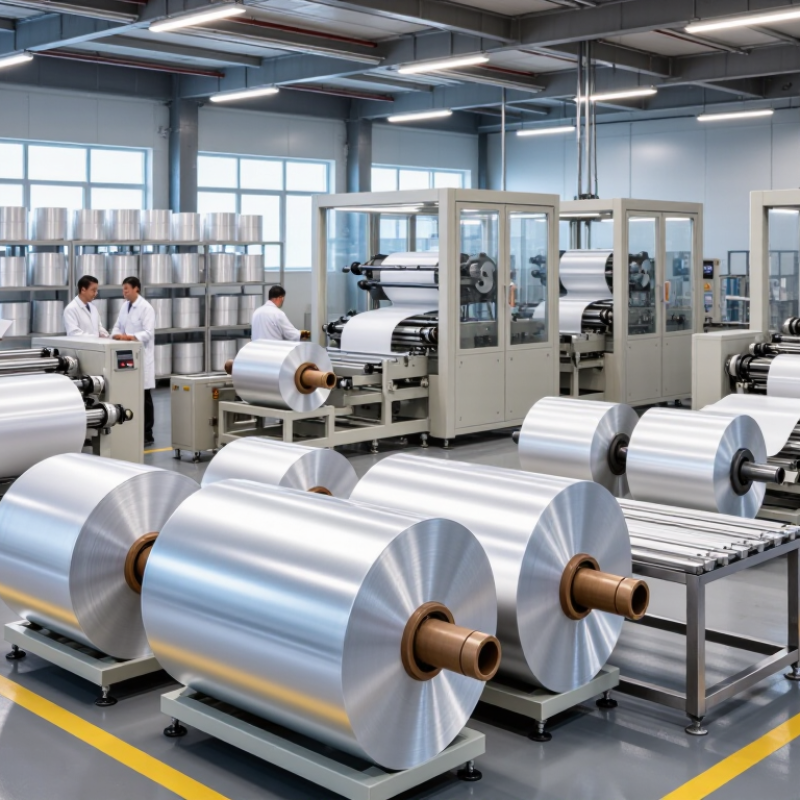
Barrier packaging foil laminate is a flexible structure made by bonding thin layers with different jobs.
An aluminum foil layer blocks much of the light, oxygen, and water vapor that can damage sensitive products. Plastic layers protect the foil and provide a surface that can be heat-sealed. Adhesive layers hold the materials together.
Each layer matters.
How does it work?
The foil creates a dense barrier path, while the outer film helps resist scuffs and handling. The inner sealant softens under controlled heat and pressure, joining the package edges. A sound seal limits pathways for air and moisture. That is the barrier.
In practice, performance depends on the full package, not foil alone. Seal temperature, pressure, and dwell time can affect the result.
Small defects can matter.
A sharp corner or repeated bending may stress the foil and create tiny cracks or pinholes. I would not assume that a thicker laminate always performs better; added thickness can affect forming, sealing, and material use.
Buyers and converters should review the product’s sensitivity, filling conditions, and expected storage environment. Barrier testing and seal checks on finished packs help confirm suitability.
A clear appearance can be reassuring, but it cannot prove barrier performance by itself. Reliable specifications should state the test method and conditions.
Barrier laminate performance depends on its layers, not foil alone. A typical structure pairs a thin aluminum foil core with polymer films and adhesive. The foil blocks light, oxygen, and water vapor; the outer film adds toughness and printability, while the inner sealant forms a leak-resistant seam.
European Aluminium’s technical guidance notes that foil around 6 microns thick can provide a near-total barrier when pinholes and seal defects are controlled.
Near-total is not perfect in practice. Creases, sharp product edges, or poor lamination can create tiny paths for gas and moisture.
Thickness, flex-crack resistance, and seal strength matter as much as barrier readings. Oxygen transmission rate and water vapor transmission rate should be measured under stated temperature and humidity conditions, because results shift with the test environment. The Flexible Packaging Association’s 2023 State of the Industry report valued U.S. flexible packaging sales at about $42.9 billion in 2022, reflecting the scale of applications where material choices affect shelf life and waste. That figure does not prove one laminate is best. A dry snack, powdered product, and oily food need different balances of stiffness, puncture resistance, and barrier. Suppliers should provide test conditions and finished-pack data, not just foil thickness. I would still inspect real seals; lab numbers can miss a stubborn corner leak.
China’s top barrier packaging foil laminate suppliers should be evaluated on measurable performance, not catalogue claims. Smithers’ report, The Future of Global Flexible Packaging to 2028, valued the global flexible packaging market at about US$270 billion in 2023. That scale makes consistent quality and documented testing essential. Buyers should compare oxygen transmission rate, water vapour transmission rate, seal strength, and laminate thickness using equivalent test conditions. Small differences matter. A pouch that seals well on a laboratory bench may still fail on a fast production line.
Ask suppliers for recent test reports, production-lot traceability, and evidence of repeatability across batches. ASTM F1249 provides a recognised method for measuring water vapour transmission through flexible barrier materials; oxygen transmission should also be tested under stated temperature and humidity conditions. Request samples with the intended structure, then check seals, folds, and edges after transport simulation. Look closely at pinholes. A glossy surface proves little.
Evaluation should also cover technical support, delivery consistency, and transparent material specifications. Compare quotations by usable yield and converting performance, not price per kilogram alone. A lower-cost laminate can create more scrap or slower line speeds. Suppliers should explain how they investigate test failures and correct process variation. No single certificate guarantees performance, and this deserves scrutiny: verify the scope, date, and issuing body of every document.
This illustrative framework highlights common factors buyers may consider when evaluating barrier packaging foil laminate suppliers. The percentages are suggested evaluation weights, not measured supplier scores; actual priorities depend on the product, application, and customer requirements. Barrier performance is commonly assessed using oxygen and water-vapor transmission testing, while compliance, quality consistency, and supply capability should be verified for each supplier.
A practical top-ten list should compare capabilities, not just quoted prices. One supplier may specialize in aluminum foil laminates for coffee and dry foods. Another may offer high-barrier structures for powders, with seal layers tailored to different filling temperatures. A third may focus on retortable pouches. It should provide test data for heat resistance and seal integrity. Details matter.
Other suppliers may offer metallized films for lighter packaging, paper-foil laminates for a distinct hand feel, or recyclable-ready structures designed to reduce material complexity. A seventh may excel at narrow-width rolls for smaller production lines. An eighth may provide printed laminates with tight color control. A ninth may support custom adhesive systems and low-volume trials. The tenth may stand out through technical service, helping buyers troubleshoot curling, weak seals, or inconsistent roll tension.
These profiles are not a universal ranking; actual strengths vary by product and factory. Ask each supplier for recent barrier measurements, sample rolls, and sealing-window guidance. Check whether reported oxygen and moisture transmission values match your test conditions. A glossy sample proves little. I would also review delivery consistency and how clearly the supplier explains trade-offs. Some specifications look impressive on paper, yet the finished pack may be difficult to run. That deserves a closer look.
This is a category-based sourcing guide, not a verified company ranking. Supplier capabilities vary by facility and product specification; confirm construction, performance data, certifications, and production capacity directly before purchasing.
| Supplier Profile | Typical Laminate Offer | Common Applications | Key Selection Points |
|---|---|---|---|
| 1. Flexible Packaging Converter | Printed, adhesive-laminated foil structures, often combining aluminium foil with polymer films or paper. | Food pouches, sachets, dry mixes, and general-purpose flexible packs. | Confirm layer structure, print requirements, sealing method, and barrier test results for the finished laminate. |
| 2. High-Barrier Food Packaging Specialist | Foil-containing laminates designed to limit light, moisture, and oxygen transmission when correctly specified and converted. | Coffee, powdered foods, snacks, and products requiring extended protection from environmental exposure. | Request the target WVTR and OTR, test conditions, seal integrity data, and compatibility with the filling process. |
| 3. Pharmaceutical Packaging Converter | Foil laminates and lidding materials developed for pharmaceutical or healthcare packaging formats. | Blister lidding, sachets, and selected medical or pharmaceutical packs. | Verify applicable regulatory documentation, material traceability, cleanliness controls, and product-specific qualification. |
| 4. Foil-and-Paper Laminate Producer | Bonded aluminium foil and paper constructions, with optional coatings or polymer layers depending on the application. | Dry food wraps, household packaging, labels, and selected insulation facings. | Check paper grade, foil thickness, bond strength, fold performance, and whether the surface is suitable for printing or sealing. |
| 5. Retort Packaging Converter | Heat-resistant multilayer structures that may include aluminium foil and are designed for specified sterilization conditions. | Retort pouches and other heat-processed packaged foods. | Confirm the exact retort time and temperature, sealant layer, pouch format, and validation data for the intended process. |
| 6. Pharmaceutical Blister Material Supplier | Forming webs and lidding materials for blister packs; foil lidding is commonly paired with a compatible heat-seal coating. | Tablet and capsule blister packaging. | Specify alloy and temper where relevant, foil gauge, coating system, sealing conditions, and compatibility with the forming web. |
| 7. Sachet and Stick-Pack Material Converter | Rollstock laminates that can incorporate foil for products needing strong light and moisture protection. | Single-serve powders, seasonings, beverage mixes, and personal-care products. | Assess machine speed, forming and sealing performance, roll dimensions, print registration, and product-specific barrier needs. |
| 8. Industrial Foil Laminate Converter | Foil-based composite materials engineered for technical applications rather than direct food contact. | Selected building, insulation, cable, and industrial wrapping applications. | Check the intended-use specification, adhesive durability, temperature range, mechanical properties, and applicable fire or building requirements. |
| 9. Custom Printing and Lamination Converter | Made-to-order printed laminates with foil selected as one layer in a specified multilayer construction. | Branded consumer packs, promotional packs, and customized product formats. | Review artwork proofing, color control, minimum order quantities, sampling process, lead times, and change-control procedures. |
| 10. Integrated Packaging Material Producer | A broader range of packaging films and foil laminates, with converting options that may include printing, coating, and slitting. | Customers seeking multiple flexible-packaging formats or coordinated material supply. | Confirm which operations are performed in-house, production capacity, quality-system scope, traceability, and consistency between lots. |
Barrier foil laminates serve food, pharmaceutical, personal-care, and selected electronics applications. In food, they protect coffee, powdered milk, snacks, and ready meals from moisture, oxygen, light, and aroma loss. Pharmaceutical packs use foil layers where strong light and moisture protection matters. Electronics manufacturers may use barrier pouches to limit humidity exposure during storage and shipping. These are not interchangeable uses: the required seal strength, puncture resistance, and barrier performance depend on the product and filling conditions.
Market growth is encouraging, but it does not guarantee every foil structure is a good fit. Grand View Research estimated the global flexible packaging market at USD 261.8 billion in 2022, with projected growth of 4.5% annually from 2023 to 2030. The broader market includes many materials, so this figure is not a foil-laminate forecast. Current design trends include thinner structures, improved recyclability, and more mono-material alternatives. Yet replacing a proven foil layer can reduce protection or shelf life if testing is inadequate. Small changes matter.
Tips: Ask suppliers for measured oxygen- and water-vapour transmission rates, seal-window data, and pack-specific validation. Test filled packs under real storage conditions; a neat laboratory result may miss rough transport, sharp product edges, or humid warehouses.
A typical structure combines a thin aluminum foil core, polymer films, and adhesive. The outer film adds toughness and printability. The inner sealant helps form a leak-resistant seam.
It blocks light, oxygen, and water vapor. Its performance still depends on intact layers and well-made seals.
No. Foil around six microns can provide a near-total barrier when pinholes and seal defects are controlled. Creases or sharp product edges can create tiny pathways.
Check oxygen and water vapor transmission rates, flex-crack resistance, and seal strength. Ask for the test temperature and humidity. Conditions matter.
Dry snacks, powders, and oily foods place different demands on stiffness, puncture resistance, and barrier performance. One structure may not suit every product.
Request finished-pack data, recent barrier measurements, sample rolls, and sealing-window guidance. Ask whether test conditions match your own.
Look at retortable structures, tailored seal layers, printed-film control, custom adhesives, and narrow-width rolls. Technical help with curling or weak seals can also matter.
No. Appearance alone says little about seal quality or line performance. Check delivery consistency and roll tension, too.
Inspect real seals, especially corners, and test the finished pack. Lab results are useful, but they can miss a stubborn leak.
Barrier Packaging Foil Laminate combines thin aluminum foil with supporting layers such as paper, polyethylene, or polyester to create flexible packaging that helps shield products from moisture, oxygen, light, and outside odors. Its performance depends on the materials selected, layer structure, seal strength, flexibility, printability, and suitability for the intended product and packaging process.
A comparison of China’s leading suppliers can consider manufacturing capability, quality consistency, customization, technical support, production capacity, and delivery reliability. These laminates serve food, beverage, pharmaceutical, personal-care, and other consumer-goods applications where product protection and shelf life matter. The market is also shaped by demand for lighter packaging, improved recyclability, material efficiency, and dependable quality control. Understanding these factors helps buyers assess supplier offerings and select a laminate that balances protection, performance, and practical requirements.

YPAK PACKAGING