Choosing the right barrier film can determine whether packaged food keeps its aroma, color, and shelf life. For many buyers, Barrier Packaging Evoh Film offers strong oxygen resistance within a multilayer structure. It can help protect roasted coffee, sauces, cheese, meat, and sensitive dry goods. Yet EVOH is not a universal solution.
Moisture remains a critical concern. EVOH can lose barrier performance when exposed to high humidity, so the surrounding polyethylene or polypropylene layers matter greatly. Film thickness, tie-layer design, sealing behavior, puncture resistance, and forming temperature also deserve careful attention. A shiny surface may look impressive, but appearance alone proves very little.
This guide reviews ten EVOH barrier films for packaging buyers who need practical comparisons. We consider oxygen transmission, moisture protection, seal strength, clarity, stiffness, machinability, sustainability claims, and supplier support. Test data should be checked under relevant temperature and humidity conditions. Laboratory results can change on a fast packaging line.
Real experience often reveals the gaps. A film may run smoothly during a short trial, then wrinkle after hours of production. Another may protect aroma well but require tighter process control. These details affect waste, downtime, and product quality. We may overlook an excellent regional supplier, too.
The best choice depends on the product, equipment, distribution climate, and compliance requirements. Buyers should request technical datasheets, migration information, sample rolls, and application-specific testing. This article provides a useful starting point, not a substitute for validation. Performance must be proven in the final package.
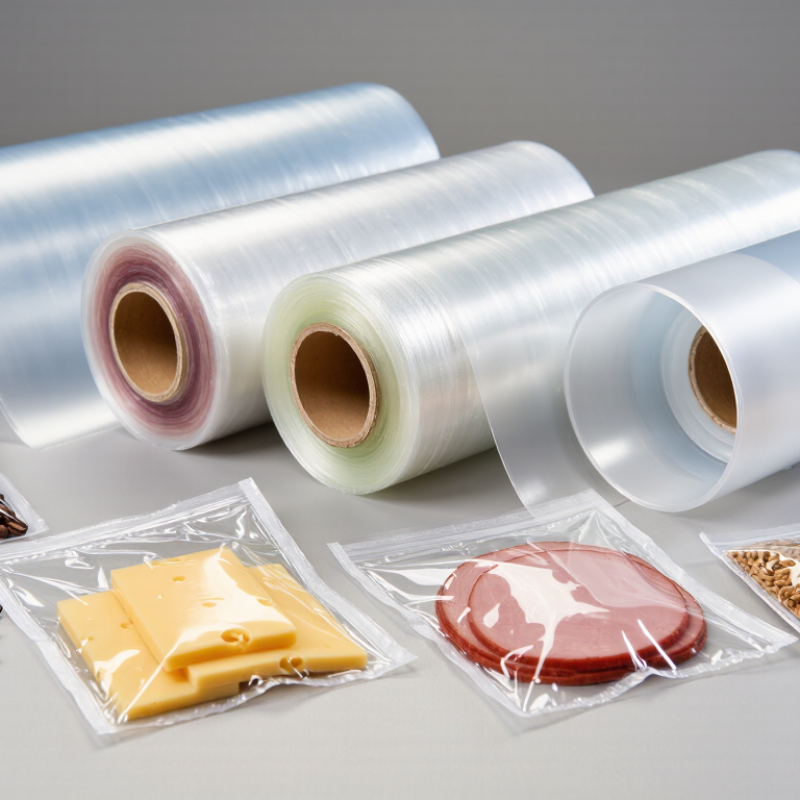
EVOH Basics: Ethylene Content, Oxygen Barrier, and Humidity Sensitivity
EVOH is valued for blocking oxygen, but its performance depends on molecular design and testing conditions. Lower ethylene content usually creates stronger hydrogen bonding between polymer chains. This improves dry oxygen resistance. It also increases moisture sensitivity and can make processing less forgiving. Common commercial structures use roughly 27–44 mol% ethylene, according to technical literature in Packaging Technology and Science.
Published studies using ASTM D3985 conditions often report oxygen transmission below 1 cm³/m²/day for thin, dry EVOH layers at 23°C. That number can change sharply. At high relative humidity, oxygen transmission may rise by one or two orders of magnitude, depending on thickness, ethylene content, and adjacent layers. A dry laboratory result can mislead. In a chilled-food package, condensation may quietly weaken the barrier. I have seen specifications focus on oxygen numbers while overlooking humidity exposure.
Tips: Ask for oxygen transmission data at both dry and high-humidity conditions. Check the test temperature, relative humidity, film thickness, and conditioning time. A multilayer design can protect EVOH with moisture-resistant polyolefin skins. However, seal integrity still needs practical testing. The European packaging sector increasingly evaluates barrier performance alongside material efficiency, while recent Smithers market analysis identifies high-barrier flexible packaging as a continuing growth area. Treat forecasts carefully. Actual results depend on package geometry, storage climate, and handling.
| Rank | Generic Film Configuration | Typical EVOH Ethylene Content (mol%) |
Typical EVOH Layer (µm) |
Indicative Oxygen Transmission Rate (cm³/m²·day) |
Humidity Sensitivity | Typical Sealing Layer | Best-Fit Packaging Uses | Buyer Considerations |
|---|---|---|---|---|---|---|---|---|
| 1 | High-barrier, low-ethylene EVOH coextrusion | 27–29 | 5–10 | ≤0.05 at 23°C and 0% RH | Very high; oxygen barrier decreases sharply at high relative humidity | Polyethylene or polypropylene | Oxygen-sensitive meat, cheese, coffee, and medical products | Choose this structure when maximum dry-state oxygen protection is more important than moisture exposure tolerance. |
| 2 | High-barrier EVOH with thick moisture shields | 27–29 | 3–8 | ≤0.10 at 23°C and 0% RH | High; outer polyolefin layers must protect EVOH from water vapor | High-density polyethylene or polypropylene | Rigid trays, thermoformed packs, and vacuum skin packaging | Useful when a thin EVOH layer is protected by sufficiently thick, low-moisture-permeability outer layers. |
| 3 | Balanced-barrier EVOH coextrusion | 32–34 | 5–10 | 0.05–0.30 at 23°C and 0% RH | High, but generally more moisture-tolerant than 27–29 mol% EVOH | Linear low-density polyethylene | Flexible pouches for dry foods, snacks, and processed foods | A practical compromise between oxygen barrier, flexibility, processing stability, and humidity performance. |
| 4 | Medium-ethylene EVOH flexible film | 32–34 | 3–7 | 0.10–0.50 at 23°C and 0% RH | Moderate to high; barrier is still humidity-dependent | Sealant-grade polyethylene | Stand-up pouches, lidding films, and small-format sachets | Suitable where flex-crack resistance and downgauging are important, provided moisture protection is maintained. |
| 5 | Medium-barrier EVOH for retortable structures | 32–38 | 5–12 | 0.10–0.80 at 23°C and 0% RH | Moderate to high; retort conditions require validated multilayer construction | Polypropylene or retort-grade polypropylene | Retort pouches, shelf-stable sauces, and ready meals | Confirm barrier retention, interlayer adhesion, seal integrity, and dimensional stability after the complete thermal process. |
| 6 | Higher-ethylene EVOH flexible barrier film | 38–39 | 5–10 | 0.20–1.00 at 23°C and 0% RH | Moderate; generally less humidity-sensitive than lower-ethylene grades | Linear low-density polyethylene or polyethylene blends | General food pouches and packaging exposed to variable humidity | Often selected when toughness and moisture tolerance are valued alongside useful oxygen protection. |
| 7 | Higher-ethylene EVOH for demanding forming | 44–45 | 6–12 | 0.50–2.00 at 23°C and 0% RH | Moderate to low relative to lower-ethylene EVOH | Polypropylene or high-density polyethylene | Deep-drawn trays, formed containers, and mechanically demanding packs | Offers improved flexibility and processability, but usually provides less dry-state oxygen barrier than 27–32 mol% EVOH. |
| 8 | High-ethylene EVOH moisture-tolerant film | 47–48 | 5–12 | 1.00–4.00 at 23°C and 0% RH | Lower relative sensitivity, but not humidity-independent | Polyethylene or polypropylene | Fresh produce, bakery products, and packaging with moderate oxygen requirements | Consider when toughness, flexibility, and more stable performance across changing humidity outweigh maximum barrier. |
| 9 | Thin-gauge EVOH coextruded film | 32–44 | 1–3 | 0.50–5.00 at 23°C and 0% RH | High; thin barrier layers are especially dependent on adjacent moisture-barrier layers | Linear low-density polyethylene | Lightweight pouches, flow-wrap films, and material-reduction programs | Validate pinholes, flex durability, seal contamination tolerance, and oxygen transmission after converting and filling. |
| 10 | EVOH film with enhanced abuse resistance | 38–44 | 7–15 | 0.50–3.00 at 23°C and 0% RH | Moderate; actual performance depends strongly on the outer layers and package design | Impact-modified polyethylene or polypropylene | Frozen foods, bulk packs, bone-in products, and transport-intensive applications | Use when puncture resistance and package durability are critical; barrier should be tested after drop, flex, and compression testing. |
EVOH is used when oxygen protection matters more than the lowest material cost. It can help preserve aroma, color, and oxidation-sensitive contents. The barrier is strong. However, performance changes with humidity, temperature, and thickness.
Suitable structures can reach below 1 cc·mil/100 in²/day under controlled, dry testing. This result is not universal. Higher humidity may reduce the oxygen barrier significantly. Always review the complete test conditions before comparing films.
EVOH absorbs moisture, which can weaken its oxygen resistance. A cold, wet food tray may create demanding conditions. Dry laboratory results can therefore look better than real performance. This weakness is easy to overlook.
Thin layers may suit dry snacks and other low-moisture products. Medium thicknesses can support vacuum pouches and oxygen-sensitive foods. Thicker structures may help with deep forming and repeated handling. More material can improve protection, but it may increase cost and stiffness.
Yes, moisture-resistant outer layers can protect the EVOH layer. Common structures combine EVOH with flexible, sealable, or puncture-resistant polymers. The surrounding layers also affect forming and sealing. A thicker barrier layer alone is not always better.
Request oxygen transmission and water vapor transmission results. Also request layer thickness, temperature, humidity, and test methods. Test finished packages after forming, sealing, and storage. Supplier data helps, but real line testing matters more.
No. Wrinkles, contamination, or weak seals can cause package failure. A strong barrier layer cannot repair a damaged seal. Check seal strength under actual production conditions. Small wrinkles matter.
Check sterilization compatibility, extractables, seal integrity, and validated shelf-life data. Review aging results after sterilization. Sterile barrier systems should follow applicable testing requirements. Do not rely on one headline oxygen value.
Not always. Multilayer designs can complicate sorting and material recovery. Recyclability claims need careful review. Ask for technical files and documented quality information. The decision is rarely perfect.
This guide explains how EVOH (ethylene vinyl alcohol) provides strong oxygen protection in packaging, while its performance depends on factors such as ethylene content, film thickness, and humidity. It outlines how EVOH compares with other materials, including oxygen transmission rates that can fall below 1 cc·mil/100 in²/day under suitable conditions, and describes ten leading film options by barrier performance, thickness, and intended use.
Buyers will learn to assess oxygen and water-vapor transmission, sealing behavior, and recyclability when choosing a Barrier Packaging Evoh Film. The guide also considers the different priorities of food, medical, and other high-barrier applications, helping readers match film construction and protection needs to the product and packaging format.

 YPAK PACKAGING